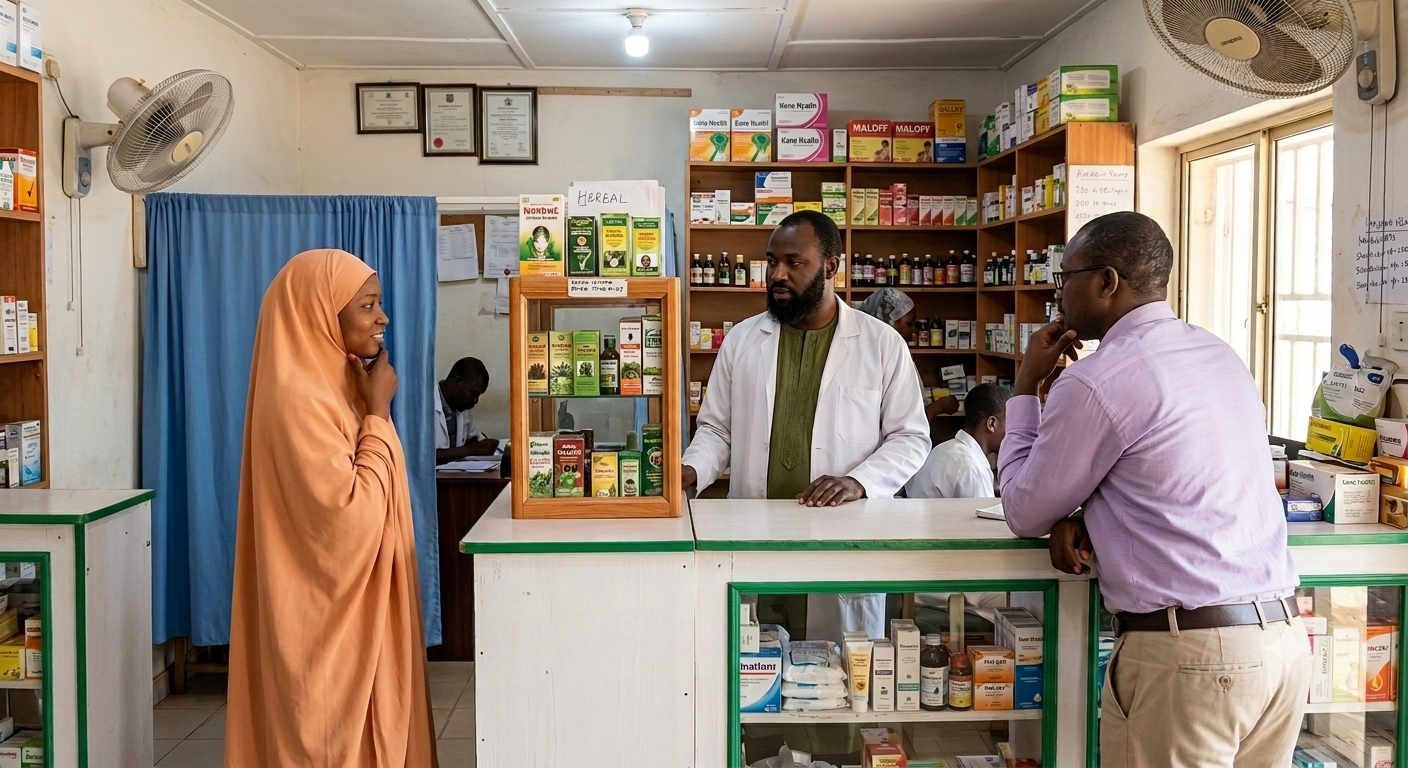


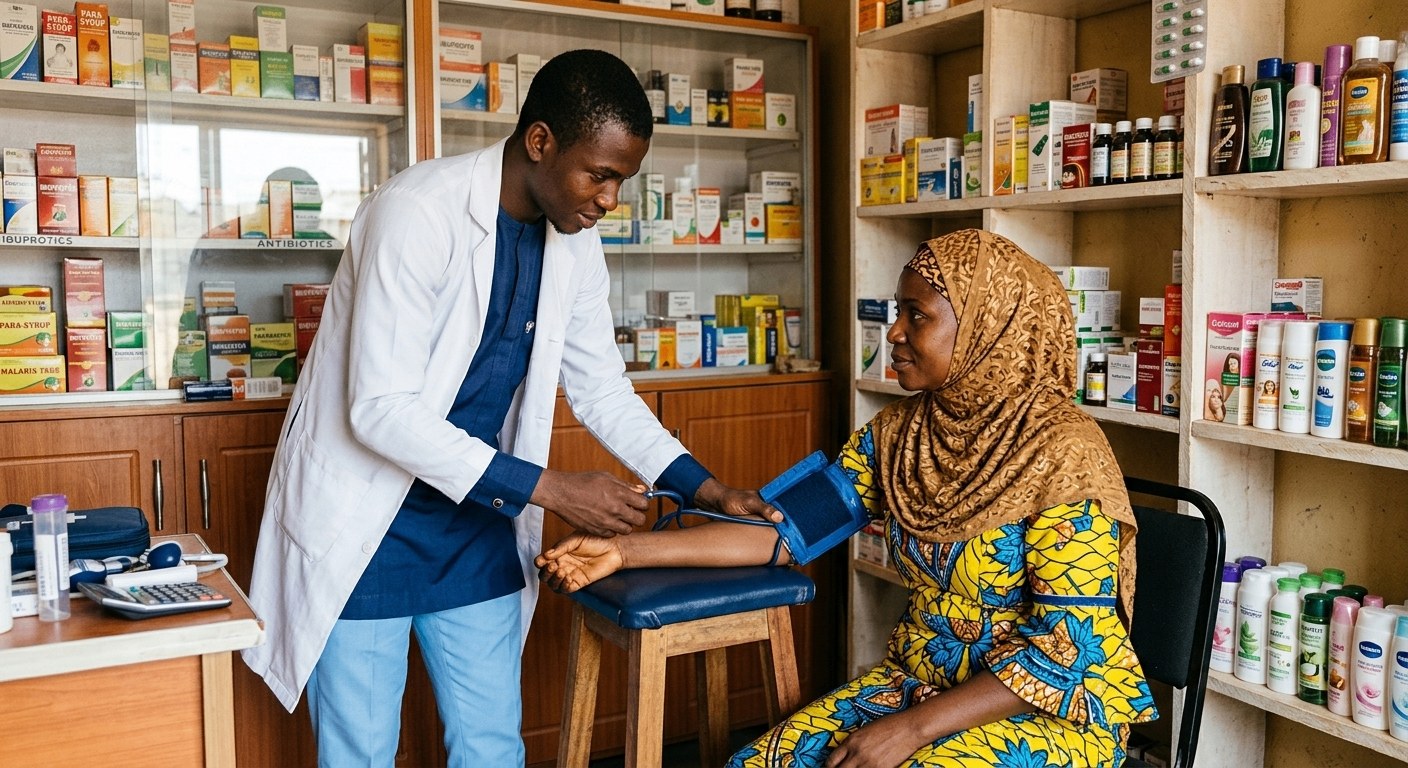
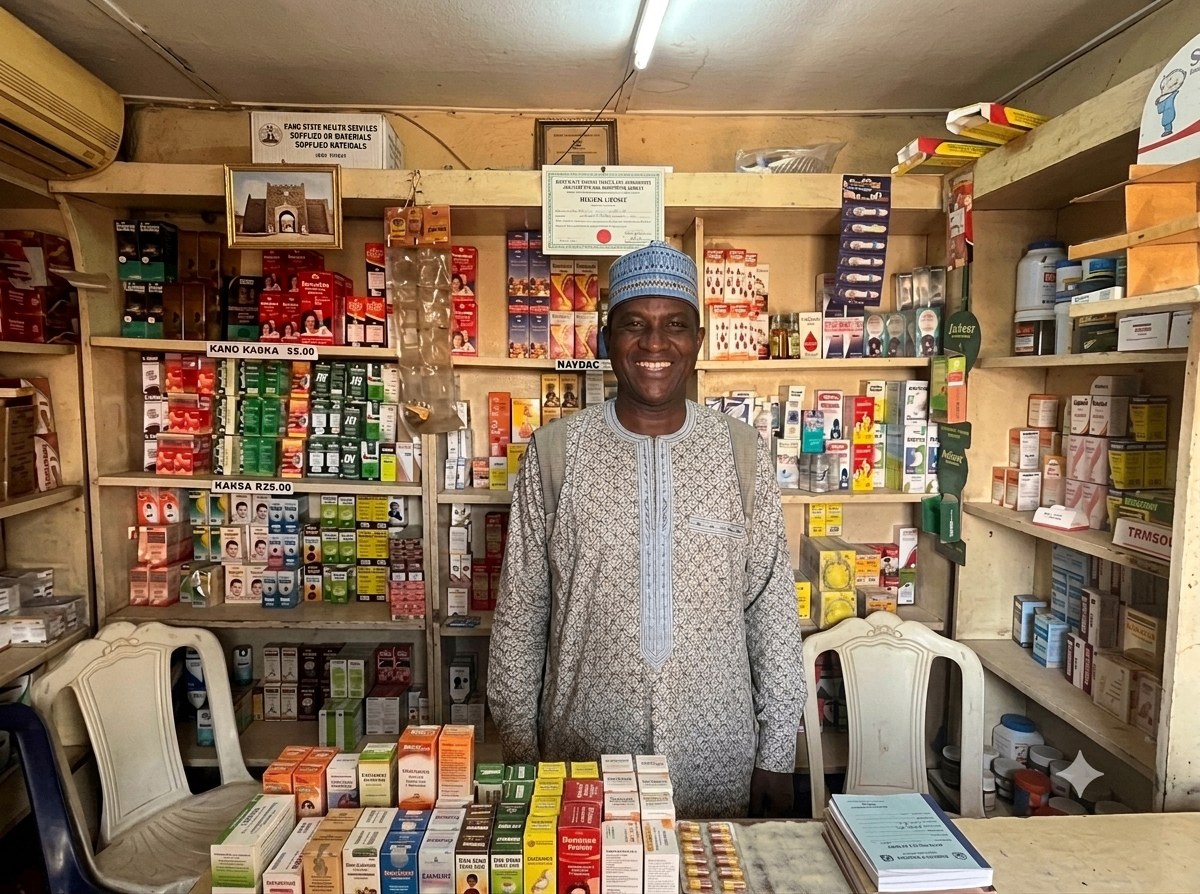

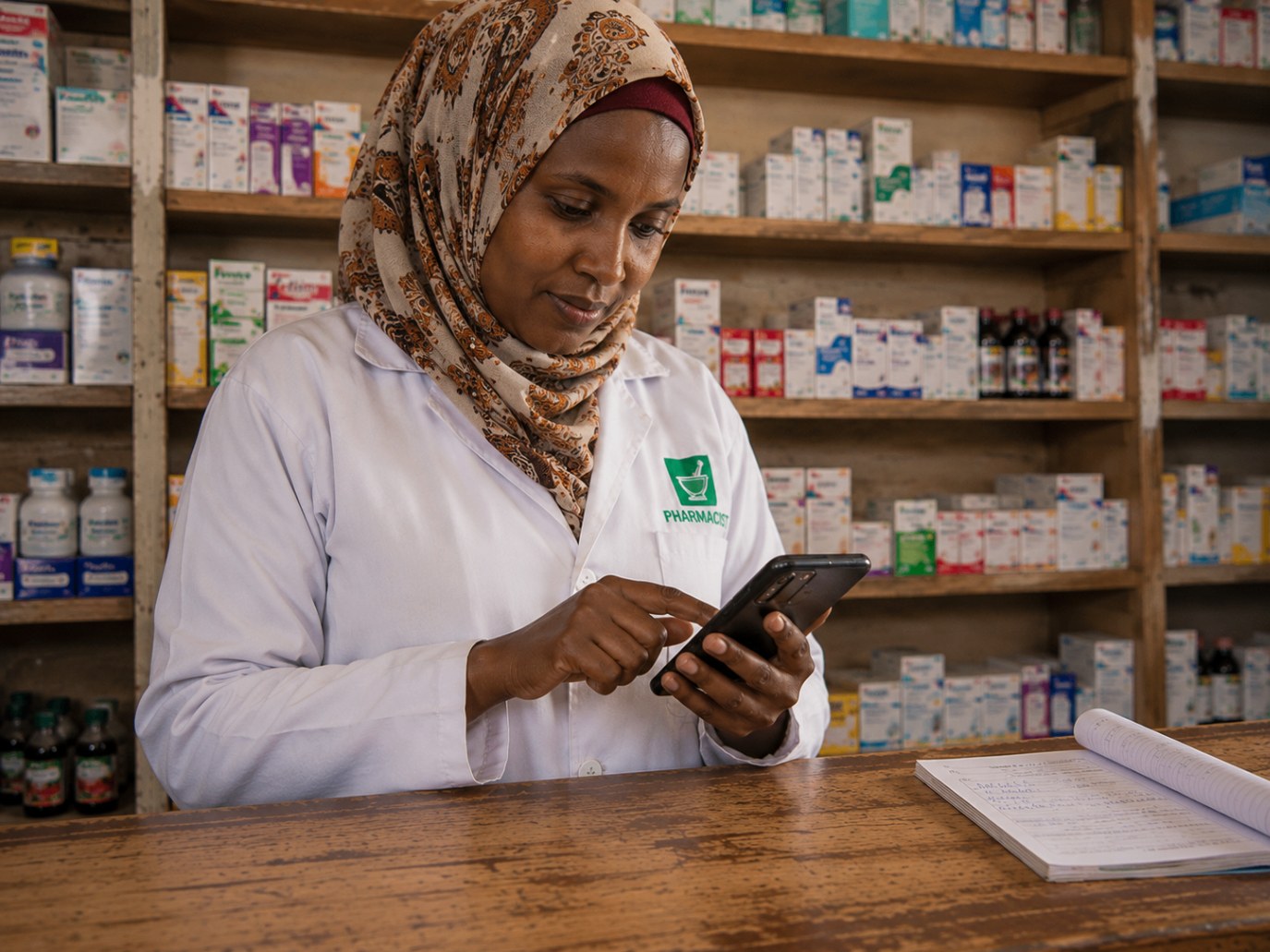
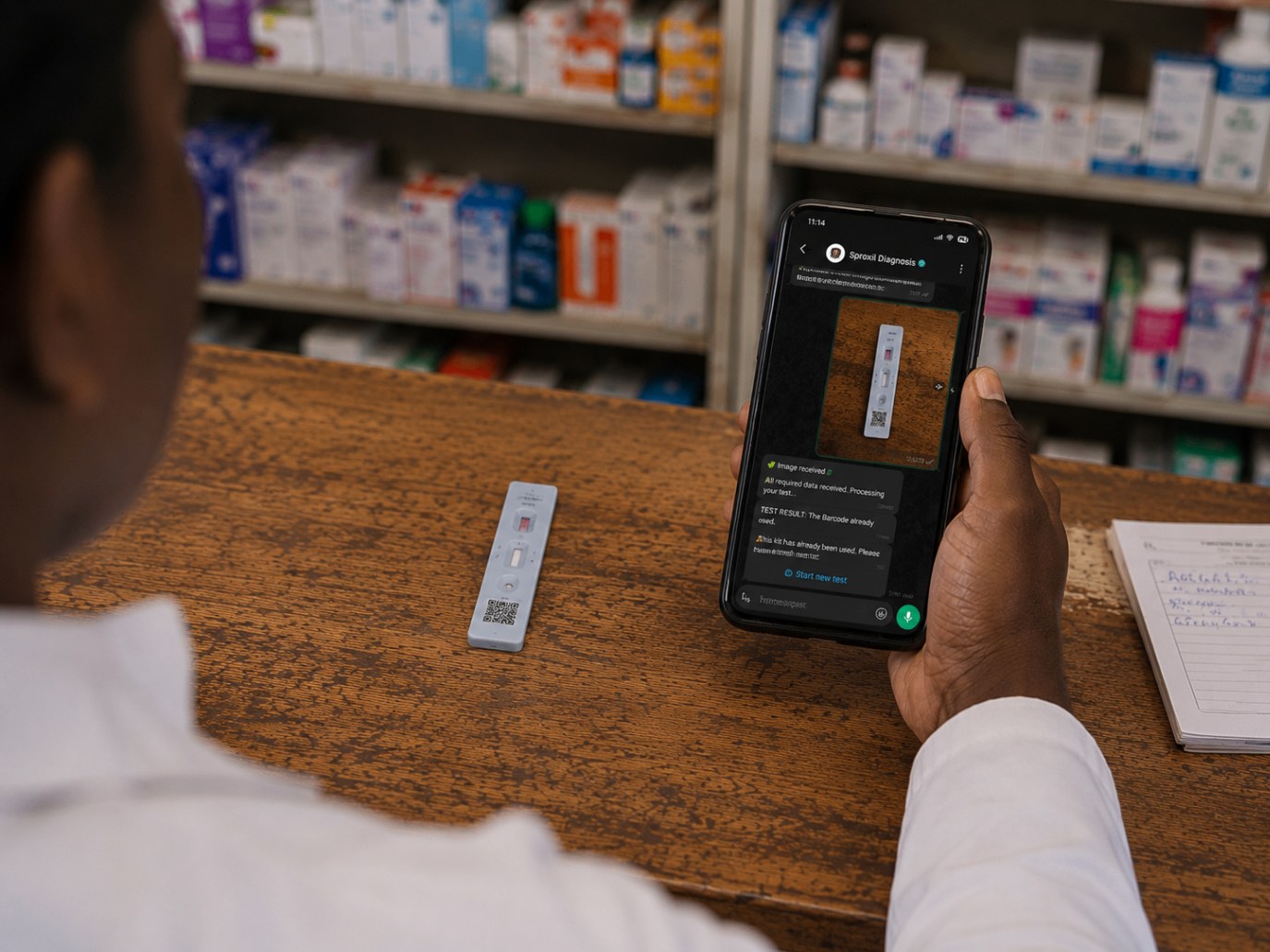
Patients and a pharmacist at a medicine shop in Northern Nigeria

Malaria Data-to-Decisions Initiative - Sproxil

Targeted Performance Management of Subnational Tailoring.

Strengthening evidence-driven decision making and tailored interventions at the subnational level across Nigeria.

About the project

This portal presents findings from a private sector–focused Monitoring, Learning and Evaluation (MLE) survey in Kano and Kaduna States, Nigeria. The study supports Nigeria's Subnational Tailoring (SNT) approach to malaria — matching interventions to local need — by building evidence on how malaria is diagnosed and treated outside formal health facilities, where many people first seek care. It was funded by the Gates Foundation, led by Solina Centre for International Development and Research (SCIDaR), and implemented by Sproxil.

Our partners

Gates Foundation logo

Gates Foundation

SCIDaR — Solina Centre for International Development and Research logo

SCIDaR — Solina Centre for International Development and Research

What we measured

A customer at the counter of a small Nigerian community pharmacy holding a blister pack of medicine, seen from behind.

Patients

How people recognise, test for and treat malaria, and their awareness of national treatment guidelines.

Interior of a tidy Nigerian patent-medicine shop with shelves of boxed medicines and a counter.

PPMVs & pharmacies

Services offered, testing practices, medicine availability and malaria case management among private providers.

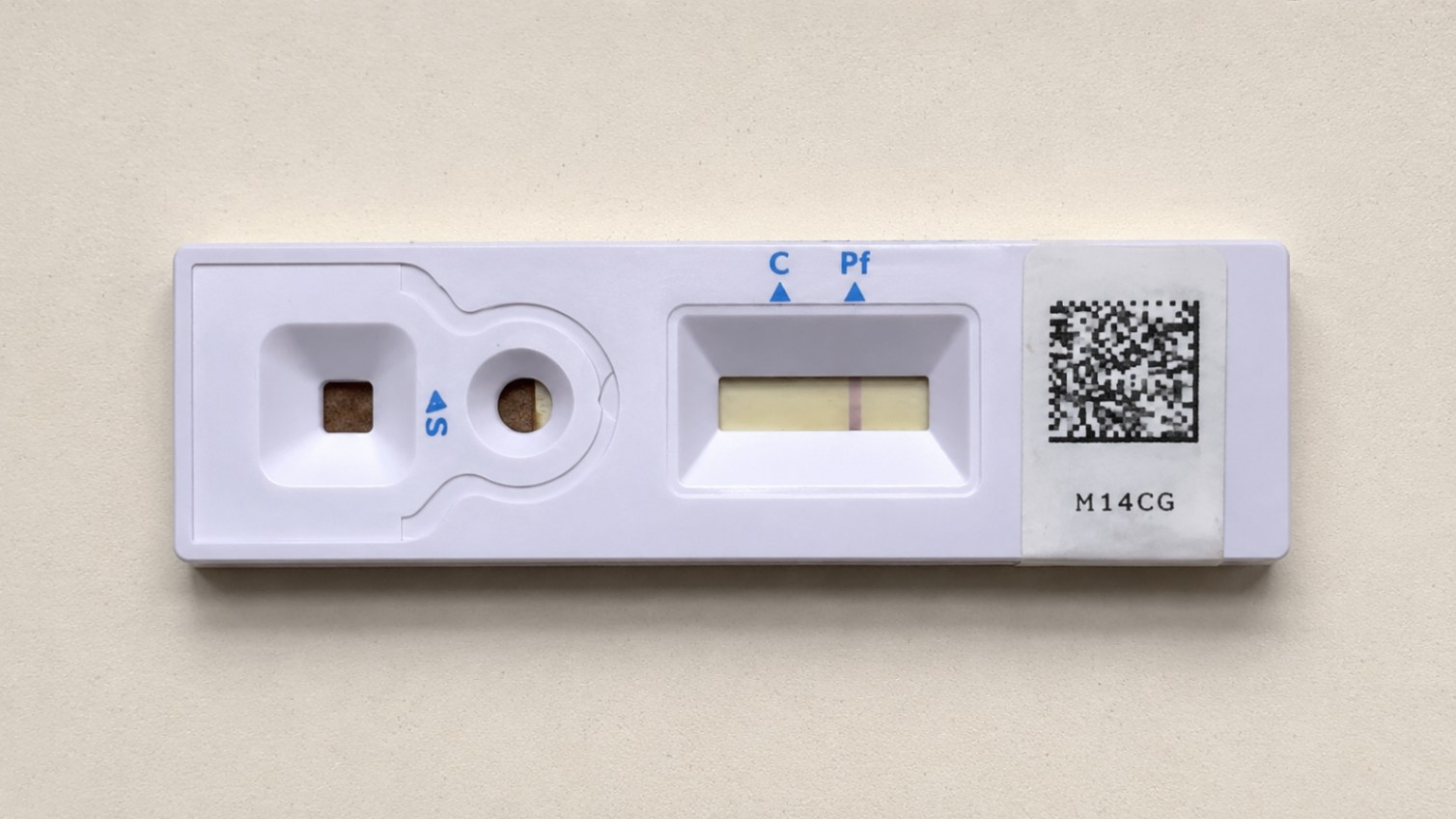
Close-up of a malaria rapid-test cassette being photographed with a smartphone on a clean counter.

Real-time test positivity

Malaria positivity drawn from AI-interpreted images of used rapid-test (mRDT) cassettes.

How the data was collected

A basic mobile phone showing a plain SMS text screen held in a hand.

SMS & phone surveys

Patients who verified an antimalarial on Sproxil's platform were invited by SMS, or called by a multilingual agent, to complete a short survey in English, Hausa or Pidgin.

A female northern Nigerian patent-medicine vendor in a hijab tapping a survey form on her smartphone behind her shop counter.

Provider survey links

Registered PPMVs and pharmacies completed a questionnaire via a unique link, with agent support where needed.

A hand holding a malaria rapid-test kit with a small 2D barcode visible on the pouch.

2D-barcoded mRDTs

Providers tested patients and sent a photo of each result; Sproxil's AI verified the test kit and read the outcome.

Participation was voluntary and consented. Personal data was handled under the Nigeria Data Protection Act 2023, and no identifiable data is published on this portal.

Evidence

Results across three data streams

Headline indicators from each survey instrument. Estimates are released with confidence intervals and state-level breakdowns as data is finalised.

Individual Patient Survey
0respondents
PPMV & Pharmacy Provider Survey
0respondents
Real-time mRDT & Test Positivity
0patients tested
Sort by
  • Attended antenatal care (pregnant subgroup)

    91.5%

    95% CI 85.5–95.2 · 119 / 130 responses

    Kano
    93.8%
    Kaduna
    87.8%
    p-value
    0.3786

    Pregnant subgroup.

  • Given IPTp medicine at ANC (pregnant subgroup)

    94.1%

    95% CI 88.4–97.1 · 112 / 119 responses

    Kano
    92.1%
    Kaduna
    97.7%
    p-value
    0.4038

    Pregnant subgroup who attended ANC.

  • Heard of SP/IPTp (pregnant subgroup)

    80.0%

    95% CI 72.3–86.0 · 104 / 130 responses

    Kano
    81.5%
    Kaduna
    77.6%
    p-value
    0.7515

    Denominator = women pregnant now or in last 2 yrs.

  • Owns or uses a mosquito net

    90.7%

    95% CI 88.6–92.4 · 798 / 880 responses

    Kano
    92.1%
    Kaduna
    88.8%
    p-value
    0.1162
  • Self-reported positive among those tested

    94.0%

    95% CI 92.3–95.4 · 837 / 890 responses

    Kano
    93.6%
    Kaduna
    94.6%
    p-value
    0.6225

    Self-report; not a diagnostic-confirmed rate.

  • Slept under a net the previous night

    88.1%

    95% CI 85.8–90.1 · 748 / 849 responses

    Kano
    89.9%
    Kaduna
    85.7%
    p-value
    0.0791

    Among net owners answering.

  • Tested for malaria before treatment

    79.0%

    95% CI 76.6–81.3 · 901 / 1140 responses

    Kano
    80.0%
    Kaduna
    77.8%
    p-value
    0.3969

    Among those who sought treatment and answered (excl. don't know).

Test positivity rate

Self-reported

0.0%

56,713 / 84,245 · PPMV three-month recalled service volumes

AI-validated

0.0%

157 / 2,066 · Logged mRDT outcomes

Self-reported and AI-validated rates use different denominators and population bases and are not directly equivalent.

Explore LGA

LGA-level view across Kaduna & Kano

Switch streams to recolour the map. Click any LGA to filter the Results table above.

Indicator:

Survey insights

What the data suggests on the ground

Six illustrative findings from the SNT survey streams, paired with the underlying statistic from the live data.

Side-by-side comparison illustration of provider-reported and validated malaria test positivity in northern Nigeria
01

What providers report vs what tests show

Providers' own three-month tallies imply roughly two-thirds of fever cases are positive, but the 2,066 logged rapid tests put validated positivity at 7.6%. The two use different denominators, yet a gap this large points to recall and reporting bias in routine provider data.

7.6% validated vs 67.3% self-reported
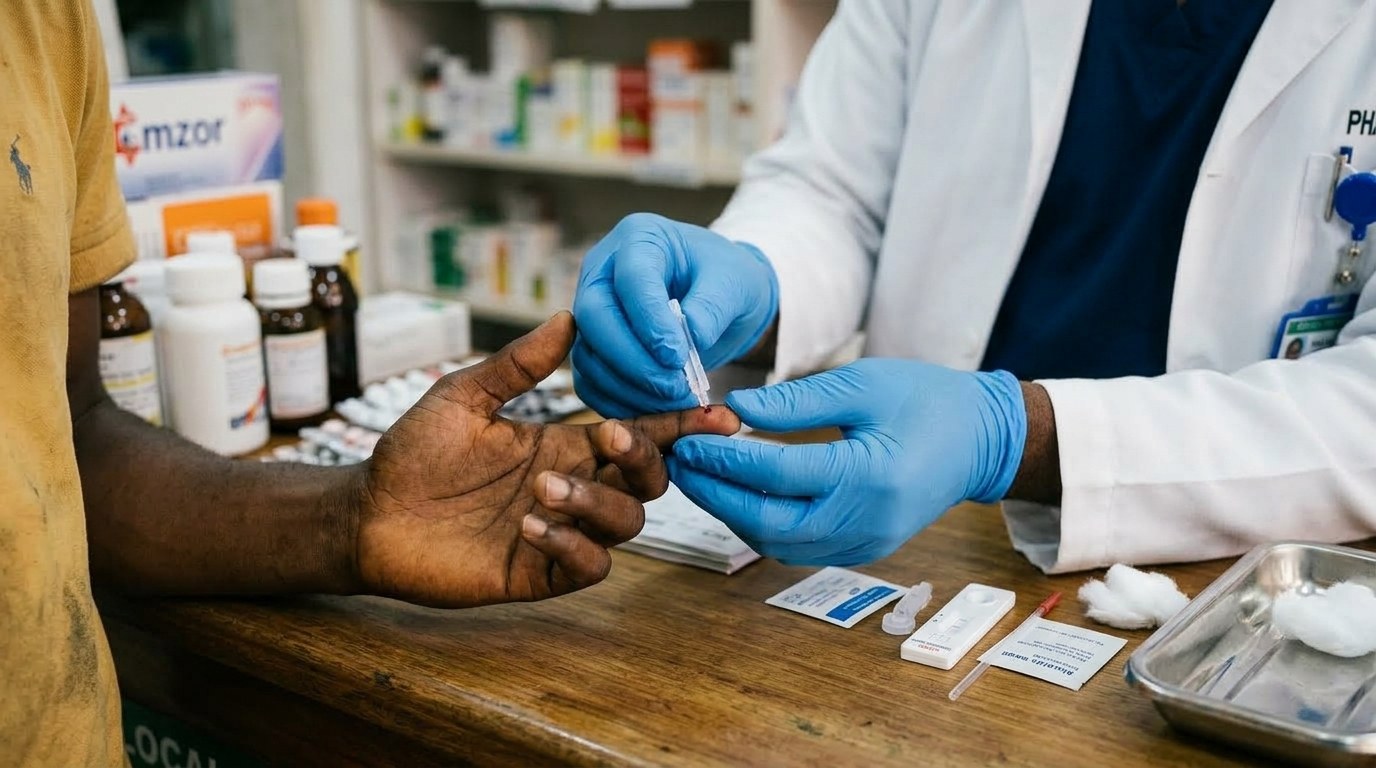
Patient receiving a rapid diagnostic test for malaria at a community pharmacy
02

Most people test before they treat

Among patients who sought care and answered, 79% were tested before receiving treatment — a solid base for test-and-treat, though one in five still treats presumptively.

79%

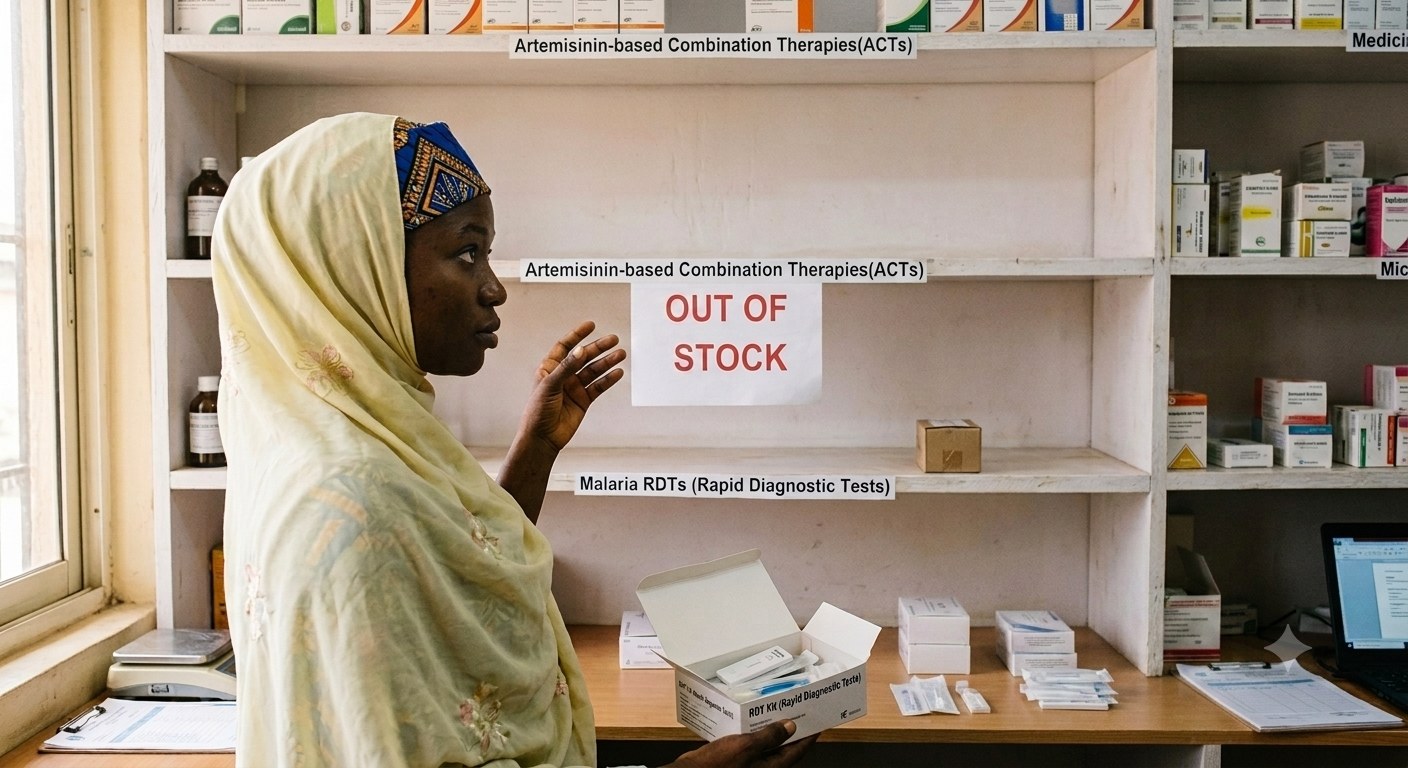
Empty antimalarial medicine shelf at a Nigerian patent medicine vendor
03

Stockouts interrupt treatment

About 44% of providers ran out of ACTs in the previous three months, so a patient can reach a stocked-looking shop and still leave without first-line care.

44.2%

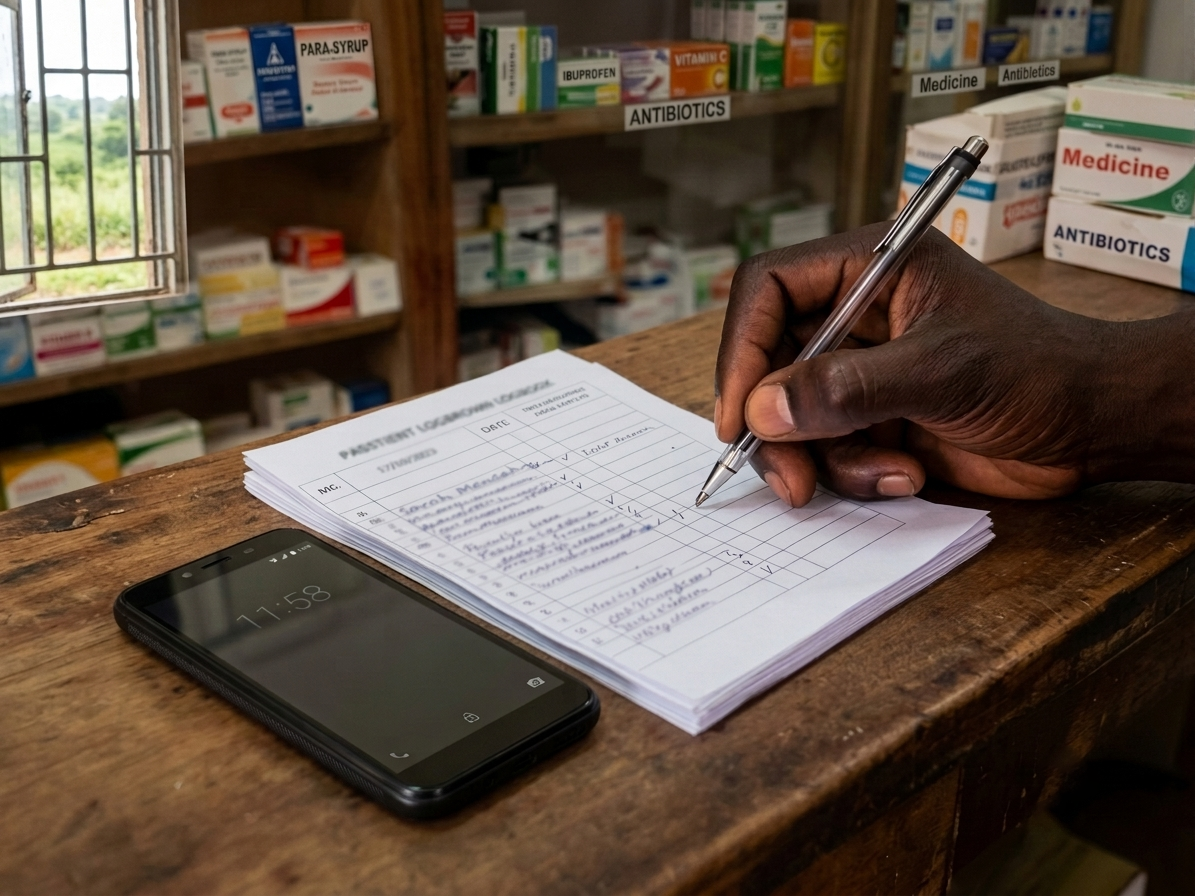
Provider writing patient details in a logbook at a medicine shop counter
04

Care happens, records don't

Fewer than half of providers keep records of the malaria services they deliver, leaving most private-sector testing and treatment invisible to routine surveillance.

43.6%

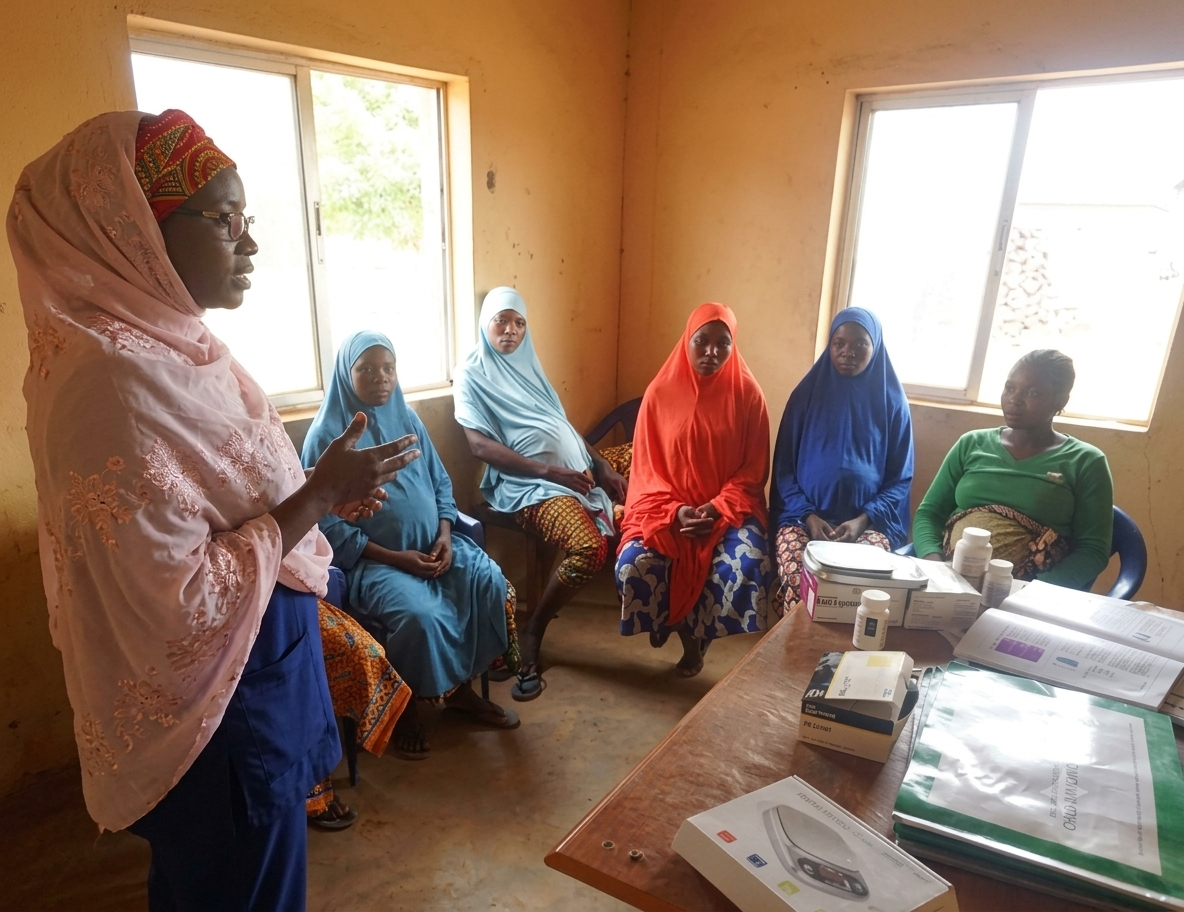
Pregnant woman receiving IPTp medication during an antenatal care visit in northern Nigeria
05

Pregnant women are being reached

Within the small group of women pregnant in the last two years, antenatal attendance and IPTp delivery were both high. Note this is a small subgroup (n=130), so treat the figure as indicative.

94.1%

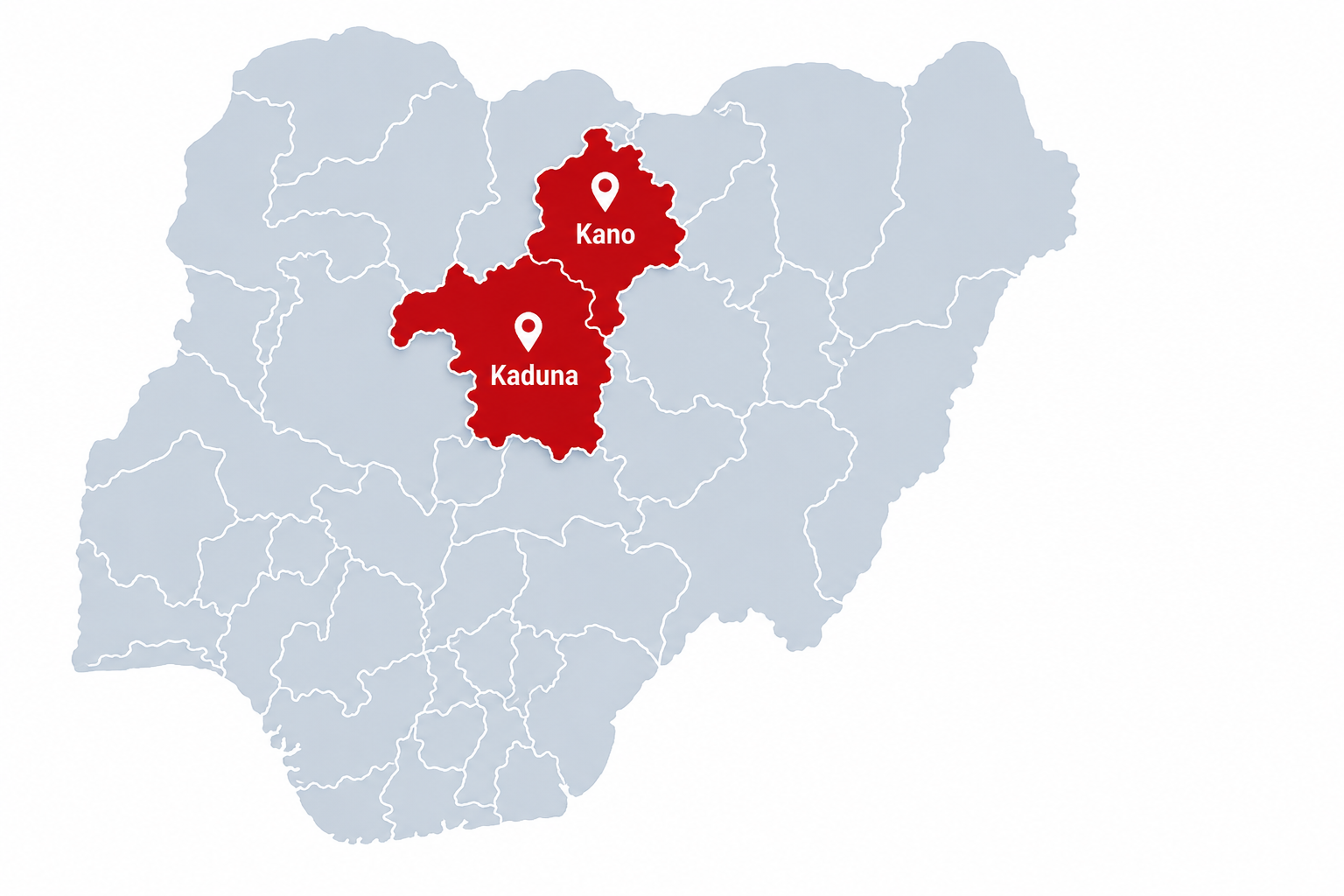
Map illustration contrasting malaria commodity stock levels between Kano and Kaduna states
06

Two states, two supply realities

Supply readiness diverges sharply — 78% of Kano providers stock mRDTs versus 55% in Kaduna, with SP availability splitting similarly. The differences are statistically significant; Kaduna's private sector is materially less equipped.

Kano 78.4% vs Kaduna 55.4%

Findings in context

Findings in context

How our findings sit alongside national surveys and the wider literature. Population prevalence (how many people are infected) and test positivity (how many of those tested are positive) are different measures — each comparison below is labelled accordingly.

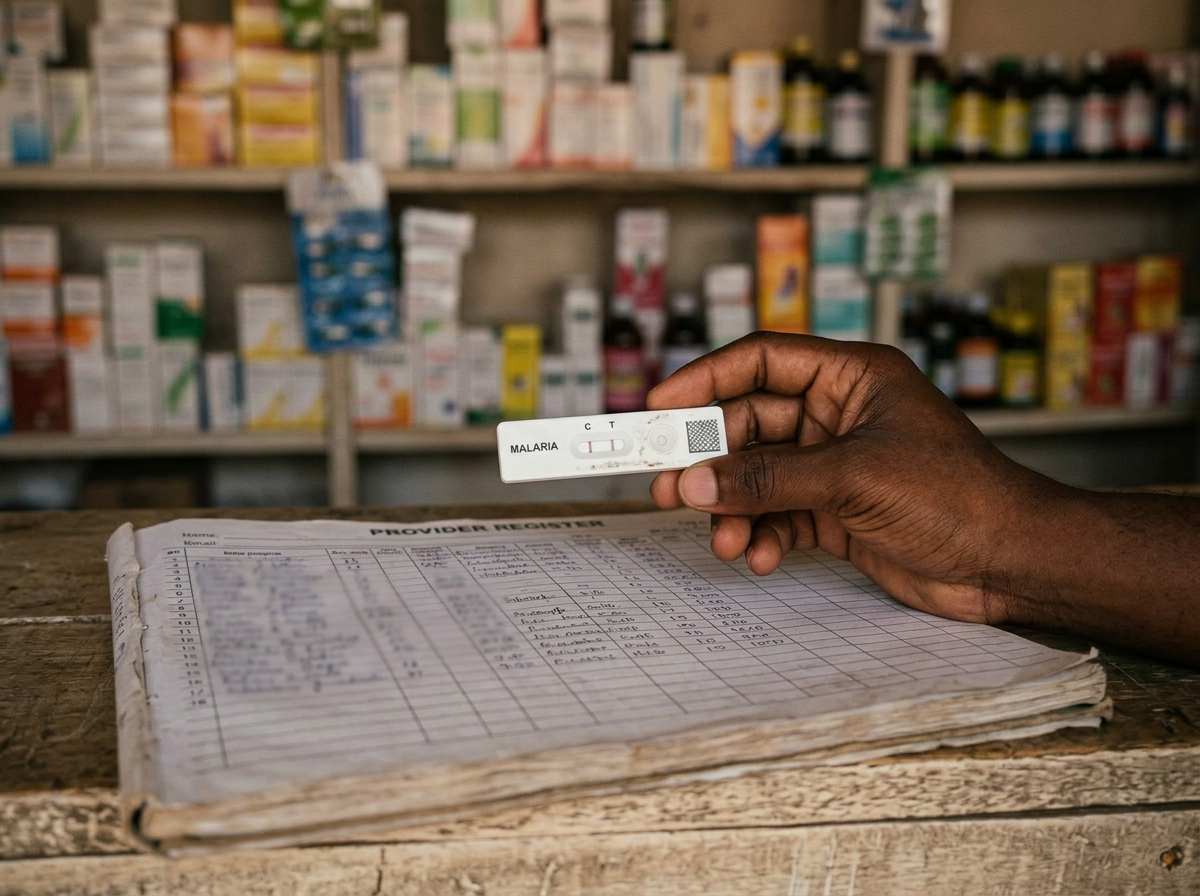
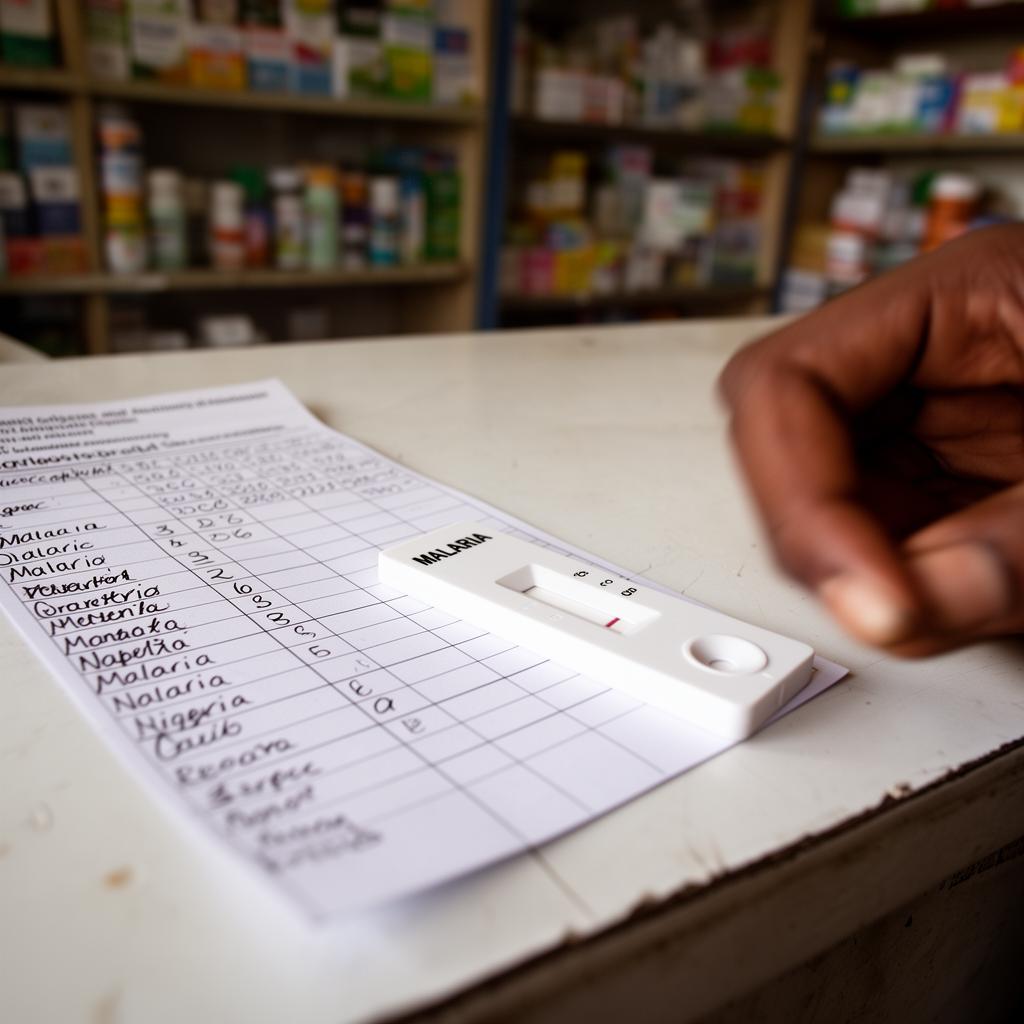
A hand holding a used malaria rapid diagnostic test cassette above an open paper provider register on a wooden counter in a northern-Nigerian medicine shop, with shelves of medicine softly blurred behind
Test positivity (TPR)

Reported positivity is far higher than validated positivity

Our finding

Across Kano and Kaduna, AI-validated rapid-test positivity was about 7.6%, against roughly 67% positivity that providers reported from their own three-month tallies.

What the literature shows

A 2026 Kano hospital study found expert re-checking of routine slides gave 20.9% positivity versus 64.9% recorded in routine facility data, with routine results correct only about 30% of the time when they read positive. A 2025 Oyo State study reported routine positivity of 73–82% nationally (Jan–Jun 2021) against roughly 35% in therapeutic-efficacy work.[1][2]

Takeaway

Independent studies repeatedly show routinely reported positivity overstates validated positivity in Nigeria. Our finding adds private-sector, barcode-tracked evidence to that pattern.

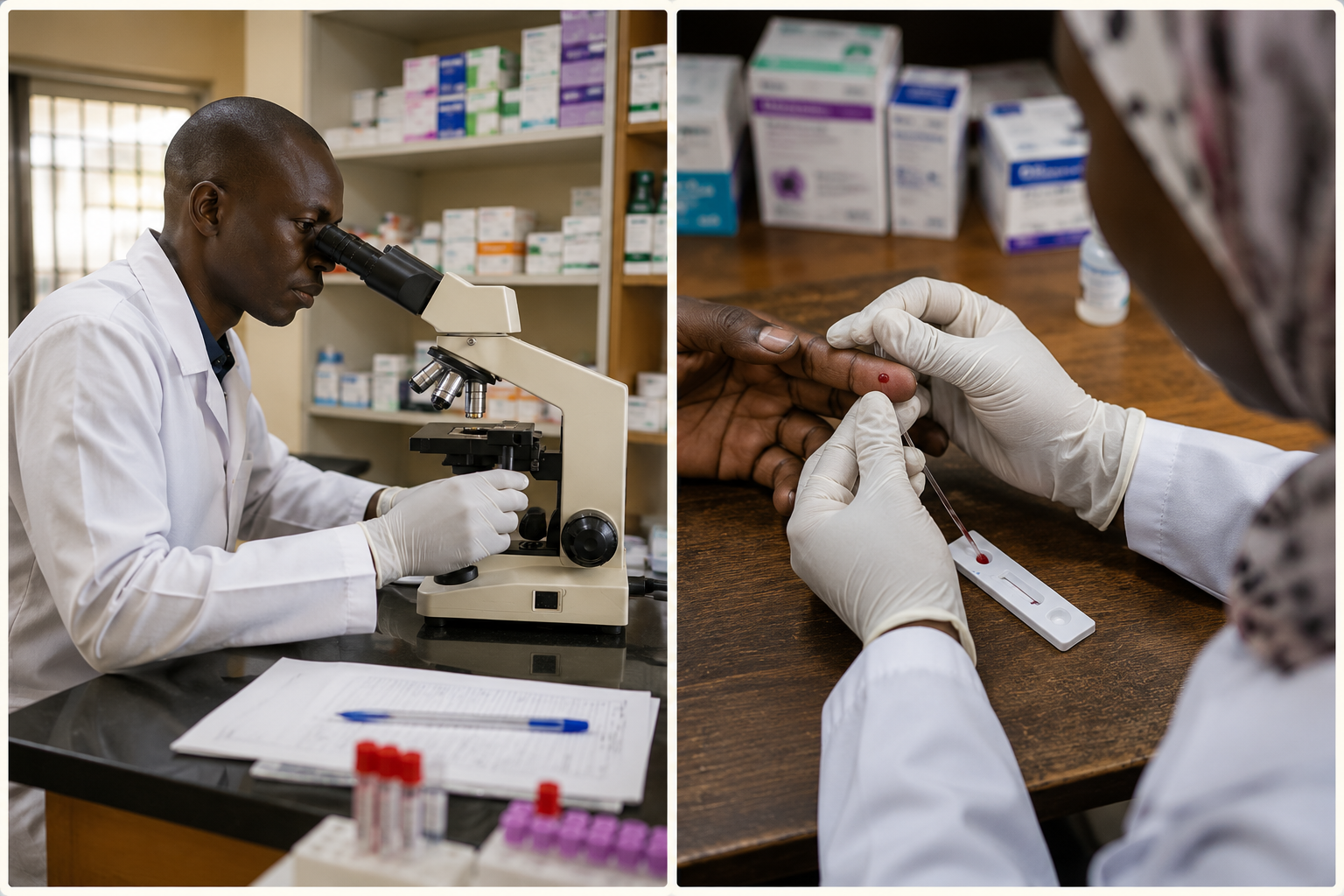
A microscope beside a malaria rapid diagnostic test cassette on a lab bench
Diagnostic accuracy

Even national surveys show test-based positivity can overstate infection

Our finding

The size of the reported-versus-validated gap points to presumptive over-reporting in private-sector records, which AI validation of each test image helps correct.

What the literature shows

The 2018 DHS measured national under-five prevalence at 22.6% by microscopy but 36.2% by RDT. A secondary analysis of the 2021 NMIS found the field RDT was positive-predictive only about half the time against microscopy.[4][5]

Takeaway

Higher apparent positivity from rapid tests than from microscopy is well documented even in gold-standard surveys, which is why image-validated testing matters.

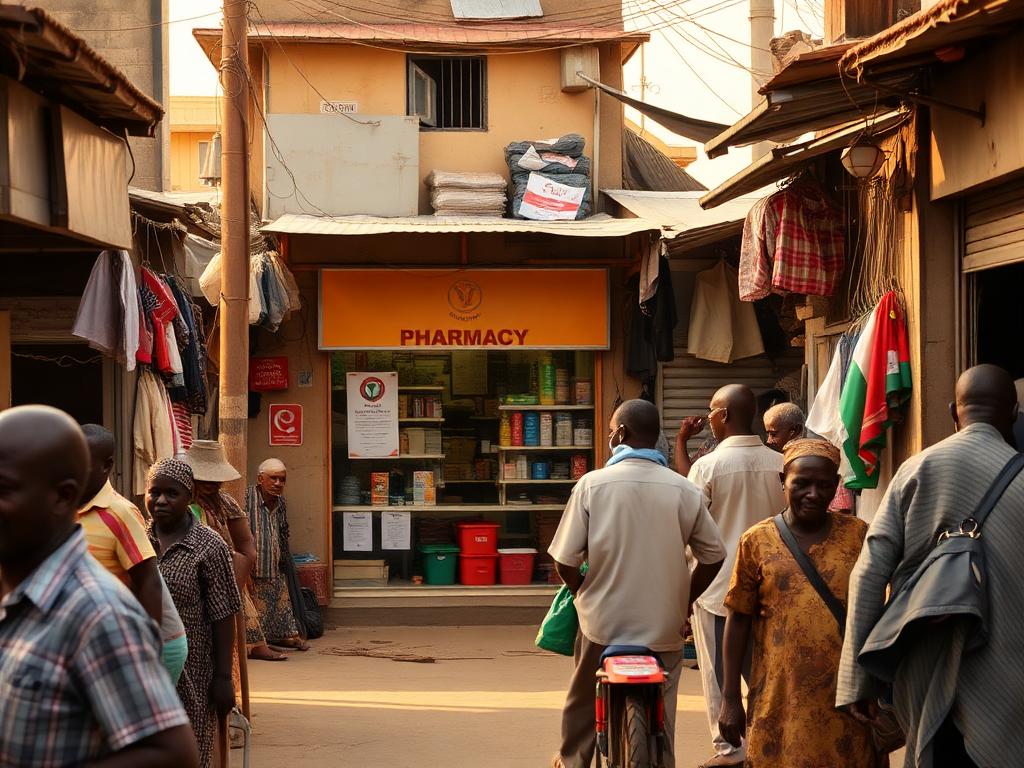
A busy northern Nigerian market street with a small pharmacy
Population prevalence

Both states sit in Nigeria's high-burden north-west

Our finding

Our survey measures test positivity among symptomatic people and provider behaviour, not population infection — so it complements, rather than restates, prevalence surveys.

What the literature shows

The 2021 NMIS estimated under-five parasite prevalence of about 26% in Kano (microscopy, high season); Kaduna has been reported around 37% in the NMIS series. The 2018 NDHS put the North West zone at 34% against 23% nationally.[6][7][8]

Takeaway

Kano and Kaduna are high-burden states, but population prevalence is a different quantity from test positivity among the symptomatic. This portal keeps the two distinct.

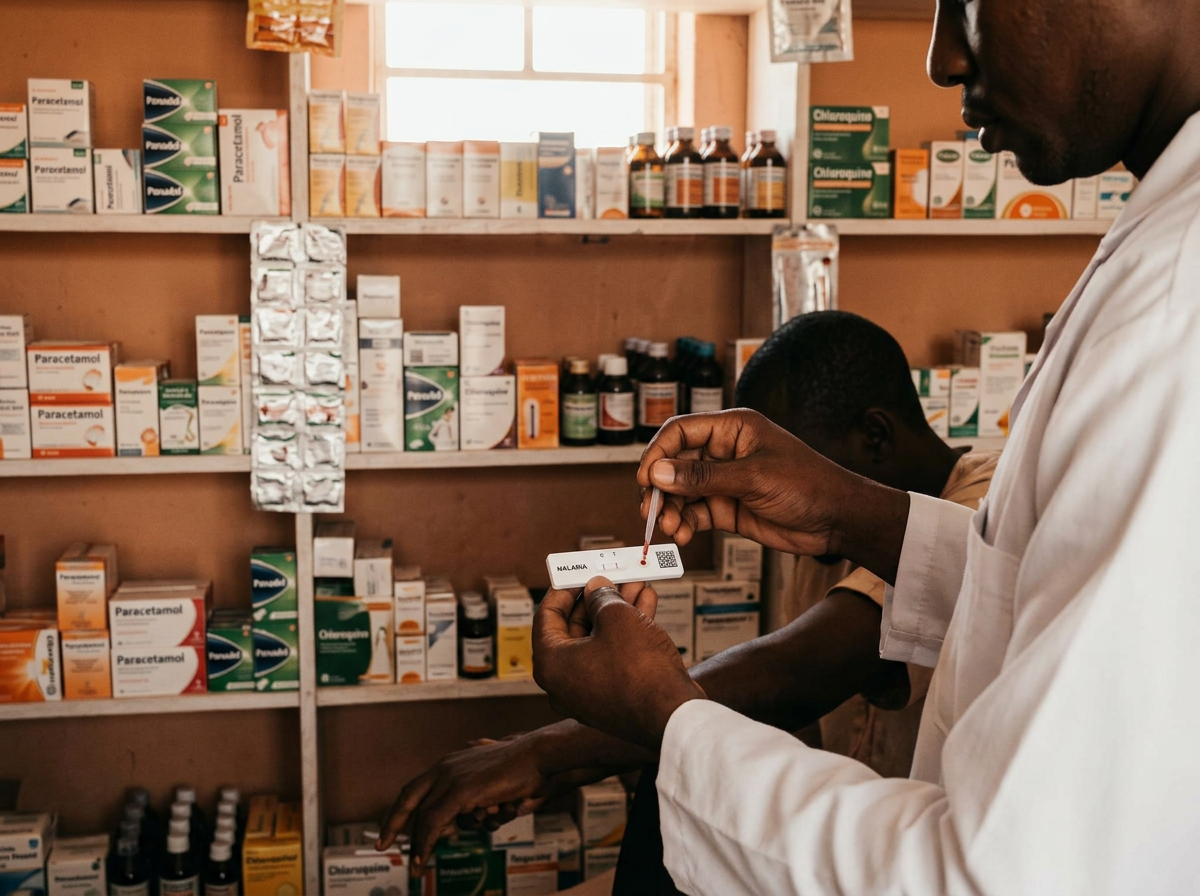
A provider in a white coat performing a malaria rapid diagnostic test in a northern-Nigerian patent-medicine shop, holding a flat white mRDT cassette while attending to a patient, shelves of medicine softly blurred behind
Test-and-treat practice

Private sector testing before treatment looks higher than historic public facility compliance

Our finding

About 79% of patients who sought care reported being tested before treatment, though provider readiness varied — Kano providers were better stocked with rapid tests and SP than Kaduna.

What the literature shows

A 2020 Kano study found only 13% compliance with the test-and-treat policy among inpatients. A 2026 study examined facility readiness and determinants of test-before-treat in public facilities across Kaduna and Kano.[3][9]

Takeaway

Reported test-before-treat in our private-sector sample exceeds historic public-facility compliance — a policy-relevant contrast worth probing further.

Wide northern-Nigerian Sudan savanna at golden hour with dry grassland, scattered acacia and baobab trees, and a slender minaret silhouetted in the distance through warm dusty haze
Population prevalence

A national decline, but persistent northern burden

Our finding

Our state-level evidence supports the case for subnational tailoring: the north-west remains high-burden even as the national picture improves.

What the literature shows

National under-five microscopy prevalence fell from 42% (2010) to 27% (2015) to 23% (2018), with rural prevalence about 2.4 times urban and the poorest children far more affected than the richest.[7][10]

Takeaway

Long-run national gains coexist with a stubborn north-west burden, which is the rationale for tailoring interventions to states and LGAs.

Why Sproxil

National reach, at a speed traditional surveys can't match

This portal was built from surveys that reach communities in days - powered by a network millions of Nigerians already use, and AI-assisted analysis that turns raw responses into verified findings fast.

0+

respondents in under a week

A single national fielding across all 36 states and the FCT.

0M+

Nigerians reached each year

Through our product verification network - the audience our surveys draw on.

0×

faster than traditional fielding

On-site surveys typically take a month or more to reach this many respondents; we did it in a week.

AI

AI-assisted analysis

AI-assisted tooling speeds data processing and analysis; every figure stays human-verified and traceable to source.

Put this evidence to work

Take the findings further

Access the data behind this portal, partner on subnational tailoring, or get in touch with the team.

Request the dataset

De-identified data and metadata available on request.

Partner with us

Explore MLE and subnational tailoring collaborations.